How to prepare your Harbor City home for wildfire season
A practical, Harbor City-specific guide to wildfire season preparation: defensible space zones, ember-resistant vents, evacuation kits, insurance checks, and the mistakes that cost homeowners the most.
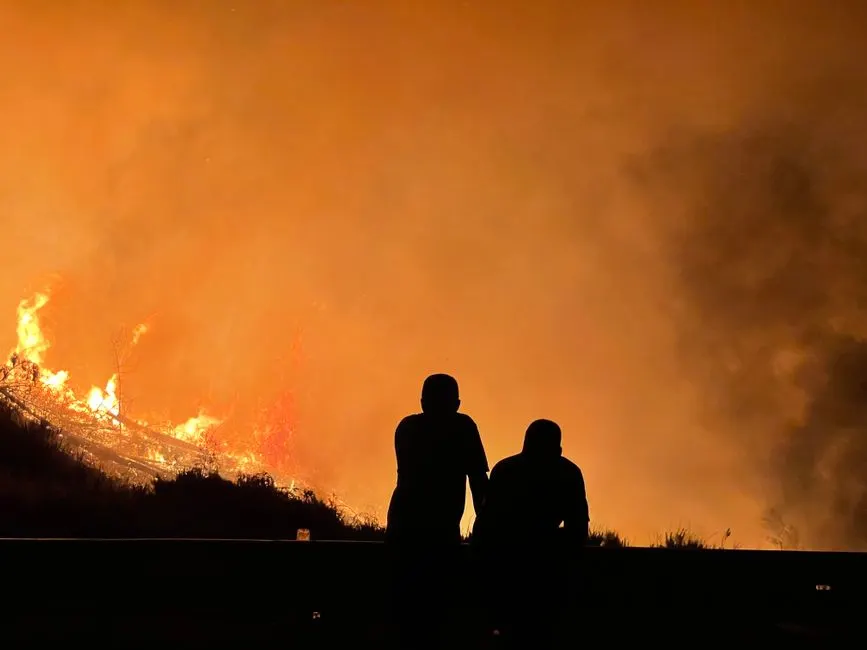
Preparing your Harbor City home for wildfire season means clearing the first 5 feet around the structure to bare ground, hardening the roof and vents against embers, and having a go-kit packed before the first red flag warning. Everything else - the 30-foot zone, the 100-foot zone, the insurance review - builds on those three moves. This guide walks through each one with the numbers, distances, and local details that actually matter for a South Bay home in 2026.
Harbor City sits in a peculiar spot. Marine air off the port keeps humidity higher than the hills, but the Palos Verdes wind events that funnel through the 110 corridor still push embers across the neighborhood. We have seen ember-driven attic fires on blocks that never saw a flame front. Preparation is what closes that gap.
When is wildfire season in Harbor City, California?
Wildfire season in Harbor City, California runs from late spring through late fall, with the highest risk between September and December when Santa Ana winds overlap with dry fuels. That is the direct answer most homeowners want, and it is worth internalizing because the calendar is not the whole story.
In November 2026, we are in the back half of that window. The hills above the 110 are cured, the marine layer is thinner, and a single wind event can move a fire from the Palos Verdes foothills toward the flats in under an hour. If you have not done your clearance yet this year, do it this month, not next spring.
The practical takeaway is to treat September through December as the high-alert window and April through June as the prep window. Two weekends of work in spring buys you a much calmer fall.
What is defensible space in Harbor City, California?
Defensible space in Harbor City, California is the managed buffer between your house and the vegetation, structures, or fuels around it, divided into three zones measured from the exterior walls. California's defensible space rules under Public Resources Code 4291 and the Office of the State Fire Marshal set the baseline: 100 feet of clearance or to the property line, whichever comes first.
That is the law. The practical version is that most Harbor City lots are 5,000 to 7,000 square feet, so the 100-foot zone often ends at your neighbor's fence. You cannot control what happens past the property line, but you can control what happens inside it, and that is where the work pays off.
We break the job into three zones because each one has a different job. Zone 0 stops embers. Zone 1 slows radiant heat. Zone 2 reduces the fuel load that feeds a crown fire. Skip any one of them and the other two lose effectiveness.
Zone 0: the ember-resistant perimeter within 5 feet
Zone 0 is the first 5 feet from the wall, and it is where most Harbor City homes fail. This zone must be noncombustible: gravel, concrete, pavers, or bare mineral soil. No bark mulch, no wood chips, no decorative grasses, no firewood stacked against the siding.
Walk the perimeter and remove anything that can catch a spark. That includes the broom leaning on the fence, the cardboard box behind the garage, and the plastic trash bins parked against the stucco. Embers land in those items and ignite them, and the fire climbs the wall from there.
If you have a wood fence meeting the house, replace the last 5 feet with a metal gate or a noncombustible panel. It is a $200 to $400 fix that closes one of the most common ignition paths we see.
Zone 1: lean, clean, and green from 5 to 30 feet
Zone 1 runs from 5 to 30 feet and should be lean, clean, and green. Keep lawns mowed to 4 inches or less, prune tree limbs up to 6 feet off the ground, and separate shrubs so they do not form a continuous fuel ladder to the eaves.
In Harbor City, the usual offenders are bougainvillea against the garage, pyracantha hedges along the property line, and Italian cypress used as a privacy screen. All three are high-oil or high-resin plants that burn hot. Replace them with low-flammability options like lavender, California lilac, or ornamental oregano.
Keep the irrigation running through October. A hydrated plant resists ignition far longer than a dry one, and the water bill is cheaper than a rebuild.
Zone 2: reduced fuel from 30 to 100 feet
Zone 2 extends from 30 to 100 feet and is about reducing fuel volume, not eliminating vegetation. Thin trees to 10 feet between crowns, remove dead branches and ladder fuels, and keep grass below 4 inches.
On a typical Harbor City lot, Zone 2 often overlaps the alley, the parkway strip, or a neighbor's yard. You cannot clear what you do not own, but you can talk to the neighbor and you can clear what you do. Document the conversation if you rent or share a wall - it matters at claim time.
How do you harden a Harbor City home against embers?
You harden a Harbor City home against embers by closing every opening where a 1/8-inch ember can enter, starting with the roof, vents, and eaves. Embers are the real threat, not the flame front. Most homes lost in Southern California wildfires ignite from an ember that lands in a vent, a gutter, or a debris pile and smolders for 20 minutes before anyone notices.
Start with the roof. Class A fire-rated roofing is the standard, and most Harbor City homes built after 1990 already have it. If yours is older, check the underlayment - a 30-year-old asphalt shingle roof with dried-out felt is a liability.
Then the vents. Replace 1/4-inch mesh with 1/8-inch corrosion-resistant mesh on foundation, gable, and eave vents. Embers that pass through 1/4-inch mesh land on attic insulation and start a fire you cannot see from the street.
Finally, the eaves and gutters. Box in open eave returns with noncombustible material and clean gutters twice during fire season, not once. Pine needles and palm fronds pack into gutters and hold an ember long enough to ignite the fascia.
Windows matter too. Dual-pane tempered glass resists radiant heat far longer than single-pane. If a full replacement is not in the budget this year, at minimum seal gaps around frames and add noncombustible screens.
If a fire does get inside, the damage is rarely limited to the burn area. Smoke travels through the HVAC system and settles into insulation and upholstery, which is why smoke damage cleanup HARBOR CITY California often starts in rooms the flames never reached. We handle that work, but preventing the ignition in the first place is always cheaper.
Wildfire season checklist for Harbor City homeowners
A wildfire season checklist for Harbor City homeowners should cover the property, the home, the paperwork, and the people. Run through this list once in spring and again in October.
- Clear Zone 0 to bare ground and remove all combustible items within 5 feet of the walls.
- Mow lawns to 4 inches and prune tree limbs to 6 feet of clearance.
- Replace 1/4-inch vent mesh with 1/8-inch corrosion-resistant mesh.
- Clean gutters and remove debris from the roof valleys.
- Pack a go-kit with 3 days of medication, water, documents, chargers, and pet food.
- Photograph every room, closet, and outbuilding for insurance documentation.
- Review your policy's dwelling coverage against current rebuild costs.
- Agree on a family meeting point and a communication plan.
The go-kit is the item most people skip. In a fast-moving wind event, you may have 15 minutes to leave. A kit by the front door turns a panic into a checklist.
If you rent rather than own, the prep still applies to your unit, but the structural work belongs to the landlord. We help tenants document and recover from fire losses through tenant fire damage cleanup HARBOR CITY California when the worst happens.
Does insurance cover wildfire damage in Harbor City, California?
Yes, standard California homeowners policies cover wildfire damage to the dwelling, personal property, and additional living expenses, but the coverage limits and the deductible structure matter more than the headline. A policy that covers $400,000 on a home that costs $550,000 to rebuild in 2026 leaves you $150,000 short.
Two things to check this month. First, the dwelling coverage limit - rebuild costs in the South Bay have climbed, and a policy written five years ago is likely underinsured. Second, the wildfire deductible, which is often a percentage of the dwelling limit rather than a flat dollar amount. A 2% deductible on a $500,000 policy is $10,000 out of pocket.
Document everything before a fire, not after. A phone video walking through each room, narrating what you see, is worth more at claim time than a shoebox of receipts. Store it in the cloud.
Common mistakes to watch out for
The most common wildfire preparation mistake is treating defensible space as a one-time project. Vegetation grows back, gutters refill, and embers do not care that you cleared the yard two years ago. Clearance is a maintenance cycle, not a checkbox.
The second mistake is focusing on the flame front and ignoring embers. Homeowners spend thousands on tree removal and nothing on vent screens, then lose the attic to an ember that entered through a 1/4-inch gap.
The third is over-clearing. Stripping Zone 1 to bare dirt causes erosion, kills the soil biology, and does not improve fire safety beyond what lean, clean, and green already achieves. You want reduced fuel, not a moonscape.
The fourth is skipping the paperwork. A well-prepared property with an underinsured policy still leaves the family short. The prep and the policy are one project.
When to call a professional
Call a professional when the work involves heights, electrical, or structural openings you cannot safely close yourself. Roof vent replacement, eave boxing, and fascia repair are three-job categories where a fall or a bad seal costs more than the contractor.
Call us after a fire, too. Smoke residue is acidic and etches metal and glass within days, and soot settles into every horizontal surface in the house. Our team handles soot removal HARBOR CITY California and the structural repairs that follow, and we work directly with your adjuster so the scope matches the damage.
We also serve the surrounding communities. Homeowners in Fire Damage Restoration in Wilmington deal with the same ember exposure off the port corridor, and the prep advice translates almost one-to-one.
Frequently Asked Questions
How do I prepare my Harbor City home for wildfire season in California?
Clear the first 5 feet around your home to bare ground, replace 1/4-inch vent mesh with 1/8-inch mesh, clean gutters, and pack a 3-day go-kit. Then review your insurance dwelling limit against 2026 rebuild costs. Two weekends of work covers the basics.
What is defensible space in Harbor City, California?
Defensible space is the managed buffer between your home and surrounding vegetation, divided into three zones: 0 to 5 feet, 5 to 30 feet, and 30 to 100 feet. California law requires 100 feet of clearance or to the property line, whichever comes first.
When is wildfire season in Harbor City, California?
Wildfire season runs from late spring through late fall, with peak risk from September through December when Santa Ana winds overlap with dry fuels. Prep work is best done April through June so the property is ready before the wind events arrive.
Does insurance cover wildfire damage in Harbor City, California?
Yes, standard homeowners policies cover wildfire damage to the dwelling, personal property, and temporary living expenses. Check your dwelling limit and your percentage-based wildfire deductible - a 2% deductible on a $500,000 policy is $10,000 out of pocket.
Who helps with wildfire preparation near me in Harbor City?
Licensed contractors handle roof vent replacement, eave boxing, and structural hardening. Our team at Fire Damage Restoration handles the post-fire side: soot, smoke, structural repair, and insurance coordination across the South Bay.
Get help with Fire Damage Restoration in HARBOR CITY
If a fire has already touched your home, or you want a professional eye on the hardening work before the next wind event, call Fire Damage Restoration Harbor City at (833) 929-6186. We inspect, scope, and price the job upfront, and we answer the phone at 2 a.m. as readily as at noon.